<img height="1" width="1" style="display:none" src="https://www.facebook.com/tr?id=548598725911645&amp;ev=PageView&amp;noscript=1">

Master's in Climate Science and Policy

Learn More

Scroll Down
$15,000 CEP Fellowship For All Students Admitted for fall 2026

All students admitted to the Bard CEP for fall 2026 enrollment will receive a guaranteed minimum Fellowship of $15,000 for their first year at CEP. More details here

Climate Science Degree Overview

The M.S. in Climate Science and Policy is designed for students who understand the risks posed by global climate change and who need advanced knowledge and skills, real-world experience, and career guidance to help drive just and sustainable policy solutions.

The degree encompasses fundamental concepts of climate science, agricultural and ecosystem science, environmental and natural resource economics, and U.S. and international climate policy.  Integrated throughout is a focus on ensuring justice in climate policy through stakeholder representation.

Classes center on scientific understanding and on economic and policy solutions, training future leaders to guide efforts in greenhouse gas mitigation and climate adaptation. Students gain hands-on experience through a 6-month professional internship, faculty-mentored research project, and community-based learning in both the Hudson Valley and Oaxaca, Mexico. These experiences help create a solid foundation for students to go on and pursue careers as policy advisors, climate scientists, geographic scientists, and more.

Make an Impact in 9 Months with Bard's Climate Master's

On climate, the next decade is critical and will determine what will be possible in the decarbonization window through 2050.  Given this urgency, the Master's in Climate Science uniquely enables students to begin high-impact work after only nine months of study. Students spend an intensive two semesters at Bard, mastering the tools required to drive effective policy change.  In June of the second year, they then spread out across the US and internationally, creating impact through a required, 4-6 month high-level Internship followed by an outcome-oriented Capstone Project that typically builds on the internship. 

First Year: Academic Training

The first-year curriculum is integrated to connect core scientific principles to socioeconomic impacts,  and economic, political, and legislative responses to climate change. Climate change policy moves well beyond controlling industrial emissions of greenhouse gasses. Climate stabilization requires the re-imagining and redesigning of food, energy, transportation and waste systems, as well as city, national and international economies - always with a focus on a just transition to a low-carbon future. 

First-year courses cover several key topics: 

  • Climate science 
  • Climate impacts on ecosystems and agriculture
  • Energy systems
  • Clean energy solutions
  • Carbon markets and incentive programs
  • Regional climate adaptation and mitigation
  • International and U.S. climate policy 
IMG_1579


All students participate in a January term course in Oaxaca, Mexico on local and regional sustainability solutions in the face of a changing climate.


Second Year: High-Impact Career Training

Beginning in June of the second year, students explore their individual career interests through a required 4-6 month, full-time climate-focused internship. Internship sites range from Australia to China, South Africa to Geneva, NYC to DC, and across the US. Students then build on their internships by researching and writing a Capstone Project. Some students qualify for a non-residence Capstone project, creating the opportunity for a fully-remote second year.

The two-year curriculum ensures that graduates develop broad and deep knowledge of climate science and policy issues; a strong suite of analytical, communication, and problem-solving skills; an understanding of how to ensure justice in policy decisions; professional experience in their chosen field; and finally, specialized expertise on the particular topic of their research project. In short, compared to other climate science programs, Bard's Climate Science Master's is designed to deliver true mastery over the student's area of focus, providing a strong foundation for career success.

Watch the recording from our webinar, Building a Career in Sustainability: Advice From Climate Change Experts:

climate-change-experts

Distinctive Features of the Climate Change Master's:

Interdisciplinary-1

Integrated, Interdisciplinary Curriculum

The Climate Science Master's features a unique, modular core curriculum where students explore issues like air and atmosphere pollution, biodiversity loss, or ecosystem services simultaneously in their science, economics, law and policy courses. This unique structure creates a powerful dialogue across disciplines, always driving toward solutions. Other climate science programs cannot deliver this level of interdisciplinary focus across classes, as students typically do not take the same courses together. Bard's core curriculum allows faculty to coordinate closely across classes, allowing the program to complete the delivery of the foundational climate policy toolkit in nine months. This frees up the second year of study for the professional internship and capstone project.

1_1 Faculty Engagement-1

1:1 Faculty Engagement

The M.S. in Climate Science and Policy offers every student individualized engagement with expert faculty on student research, writing, and communication. Our small class size and dedicated graduate faculty provide students with unmatched access to their professors and mentorship opportunities. Bard was recently ranked #1 in the US for classroom experience—the Graduate Programs in Sustainability carry that tradition of excellence forward.

Professional-1

High-level, Extended Professional Internships

All CEP students complete a 4-6 month, student-driven, full-time internship from June to January of the second year in NYC, DC, internationally, or wherever leading-edge policy work is being done. 

The internship is a major item on our graduates' resumes, and supports development of their career networks. Between 30% and 50% of internships turn directly into jobs. The internship also typically forms the basis for the students' Master's Capstone Projects.

Bard CEP helps students find internship opportunities with a variety of institutions, and is continuously expanding its list of internship sponsors. The internship allows students to follow their preferred areas of specialization locally, elsewhere in the United States, or abroad. The internship gives students an applied focus to their degree and an opportunity to learn in a professional setting the job-specific skills they will use upon graduation.

Selected List of Internship Placements:

  • Amazónicos por la Amazonía–AMPA (Peru)
  • American Museum of Natural History, Center for Biodi-versity and Conservation
  • Campanario Research Reserve (Costa Rica)
  • Center for Disease Control
  • Chinese Academy of Sciences Global Lake Ecological Observatory Network (China)
  • Conservation Law Foundation
  • Council on Competitiveness
  • Earth Pledge | Ecologic Institute (Germany)
  • Environ-mental Advocates of New York
  • Environmental Defense Fund
  • Federal Reserve Bank of Atlanta
  • Food and Water Watch
  • German Marshall Fund
  • IBM Corporation
  • Instituto de la Naturaleza y la Sociedad INSO (Mexico)
  • International Food Policy Research Institute
  • Malawi Sustainable Agricultural Project (Africa)
  • University of Maryland Harry R. Hughes Center for Agro-Ecology
  • National Resources Defense Council
  • New York State Energy Research and Development Authority
  • Nike
  • New York City Department of Parks and Recreation
  • Ocean Acidification Research Center
  • Ohio Environmental Protection Agency
  • Pace Energy and Climate Center
  • Resources for the Future | Riverkeeper, Inc.
  • Scenic Hudson
  • Slow Food USA
  • The Beacon Institute
  • The Energy and Resource Institute, TERI (India)
  • The Nature Conservancy
  • U.S. Agency for International Development
  • U.S. Environmental Protection Agency, Region II, Wetlands Division
  • United Nations Environment Programme 
  • Winrock Internation-al
  • Woods Hole Research Center
  • World Resources Institute  
Global-1

Global and Local Engagement + Peace Corps Option

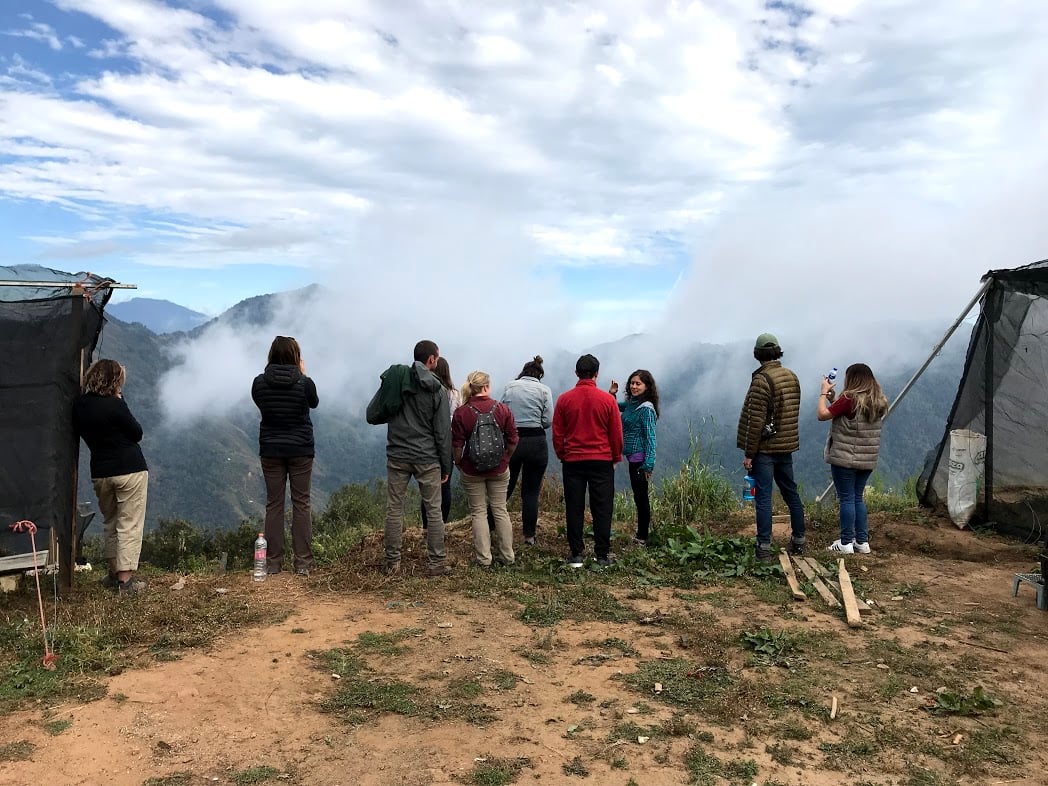
Students engage hands-on with local, regional and global sustainability challenges while in residence at Bard, in the beautiful Hudson Valley in New York State. During their first year, students work with local community groups to address regional PFAS/PFOS water contamination.

In January of their first year, all students also participate in a ten-day immersion in Oaxaca, Mexico, focused on sustainable development. Read this letter home from Professor Segarra, and watch this video for more information.
_YAHDbTUCtUqBkdqHAYG2wfkYofRDxfBJL0IWjWy0S95k-KfGbHYXAyVyKQOTdMME8rBCAmpY6tZWQ=w1439-h786

In the second year, some students pursue international internships, while others work on local and regional challenges in the US. 

Bard CEP also offers students the opportunity to combine their graduate work with Peace Corps service - click here to learn more.

Research-1

Individualized Research Opportunities
At Bard, the Master's Project provides the opportunity for students to develop true mastery in their chosen field of interest, ranging across topics such as water, energy, biodiversity, toxic pollution, and environmental justice. Unlike at many other schools where a capstone project is derivative of a faculty member's research interest, at Bard, students develop their own capstone topics, typically focused on solving an environmental policy problem identified during the student's internship. In these cases, students devote an entire year to practical work in the area in which they are passionate: six months of hands-on experience, coupled with six months of academic analysis and reflection through their capstone work. This kind of mastery provides a strong foundation for career success. Each Master's Project is carefully mentored by two Bard CEP Faculty members, including a primary and secondary advisor. 

Research-1

Career Focus

Careers in climate change require "changing the rules" to incentivize sustainable outcomes. Graduates with a Master's in Climate Science do this work in a wide variety of professional settings in national, international, state and local government; in nongovernmental organizations; in consulting firms and private corporations; and in development, advocacy, and conservation organizations. The integrated curriculum, the extended professional internship, and the capstone project come together to give our students the knowledge and the practical experience to gain meaningful jobs in their chosen arena. In a typical year, close to 40% of Bard CEP students are already employed upon graduation, primarily as a result of job offers arising from the professional internship. On average, 75-85% of graduates find work in the environmental sector within six months of graduation.

To learn about the diverse careers our graduates are pursuing, please review our Alumni Profiles


Course Work for the Climate Master's

The Climate Science and Policy curriculum focuses on climate science, energy and food systems, and agriculture and ecosystem linkages to climate. It connects core scientific principles to everything from socioeconomic impacts, sea level rise projections, infrastructure and technology policy, and economic, political, and legislative responses to global climate change.

Students master the basic concepts of environmental and natural resource economics, environmental policy, and detailed analyses of U.S. and international climate law and policy. Courses emphasize analytical frameworks and basic principles through examples and case studies. Joint class sessions, field trips, guest lectures, and conferences expose students to the critical issues and contemporary practices of environmental policy.

Throughout, there is a focus on stakeholder engagement as a primary strategy to ensure justice in policy-making. The nine-month interdisciplinary curriculum, combined with the internship and the Capstone project in the second year, allow students to specialize in their chosen field of interest and launch a high-impact career.

Course Descriptions      Faculty Members


Communication and Policy Making Strategy

Climate change professionals must be able to communicate their knowledge clearly and effectively through the spoken and written word as well as with images, data, and figures. Courses emphasize various modes of communication and persuasion through writing exercises and group presentations. Regional and international implications of “local” environmental problems are explored. Special emphasis is given to the problem of translating scientific knowledge into workable policies. Students learn the scientific basis underlying climate solutons and the difficulty of policy making under conditions of risk, scientific uncertainty, and incomplete information.

Just Transition to a Low-Carbon Future

Courses in economics, law, and policy explorie how society might respond to climate change at the scale and speed that science and justice demand. The policy tools that are available including laws, regulations, market-based instruments, technology and infrastructure policy and voluntary agreements, are shaped by a variety of political, cultural, and ethical forces. Students analyze how these factors come together to influence the policy-making process. They also analyze how the tools can be applied locally, regionally, and globally to influence behavior, achieve or go beyond compliance, and lead to rapid reductons in global warming pollution and effective adaption efforts.

Course Descriptions

View the Course Library

Frequently Asked Questions about a Master's in Climate Policy

What is an MS in Climate Science and Policy?

An MS in Climate Science and Policy is a graduate degree that combines climate science, energy systems, environmental economics, and public policy. It trains students to analyze climate impacts and develop science-based strategies for mitigation, adaptation, and sustainable development.

What do students learn in a climate science and policy program?

Students study climate systems, climate modeling, energy and carbon cycles, quantitative methods, environmental economics, and policy design. The curriculum focuses on translating scientific research into actionable climate and energy policies.

Who is the climate science and policy master’s program designed for?

This degree is ideal for students interested in climate change, environmental science, clean energy, climate policy, or resilience planning. It is well-suited for analytical thinkers who want to apply scientific understanding to real-world climate challenges.

What careers can you pursue with a master’s in climate science and policy?

Graduates often become climate policy analysts, resilience planners, renewable energy consultants, emissions analysts, sustainability researchers, or climate program managers working in government, NGOs, research institutions, and private-sector climate and energy organizations. Check out our full guide to careers in sustainability

Is a master’s in climate science and policy worth it?

Yes. As governments and organizations expand climate action efforts, demand for professionals with skills in climate analysis, policy design, and energy systems continues to grow. The degree supports meaningful work in climate resilience, sustainable energy, and environmental planning.

What’s the future of climate science and policy in the US?

The future of climate science and policy in the US is defined by rapid growth, rising urgency, and a strong need for professionals who can translate climate data into real solutions. As climate impacts intensify, governments, businesses, and communities are increasingly focusing on clean energy, resilience planning, and science-based climate action.

Bard emphasizes that the next decade is critical — and organizations increasingly need leaders who understand climate systems, environmental economics, and policy design. This growing demand creates strong career pathways in climate analysis, adaptation planning, renewable energy policy, and sustainability strategy across the public, private, and nonprofit sectors.


Bard-eBook-Cover-Mockup-UPDATE

Download
A Guide to Getting an Environmental Policy Degree


Campus Visits

Whether you are hoping to better understand class structure, make connections with faculty and current students, or get a feel for campus culture - visiting campus is the best way to find out if Bard Center for Environmental Policy is the right fit for you.

When you register for a campus visit, our Bard Graduate Programs in Sustainability admissions staff work with you to customize an on-campus experience, which may include attending class, having lunch with current students, meetings with faculty, and taking a tour of campus.

Learn More and Pick a Date to Visit

Want to learn more?
Let's chat!

We love to chat one-on-one with aspiring change agents. Our team is happy to schedule a call to discuss your sustainability career goals and tell you more about our various programs. We can also get you connected with an alum, professor, or student doing work you are interested in learning more about.